

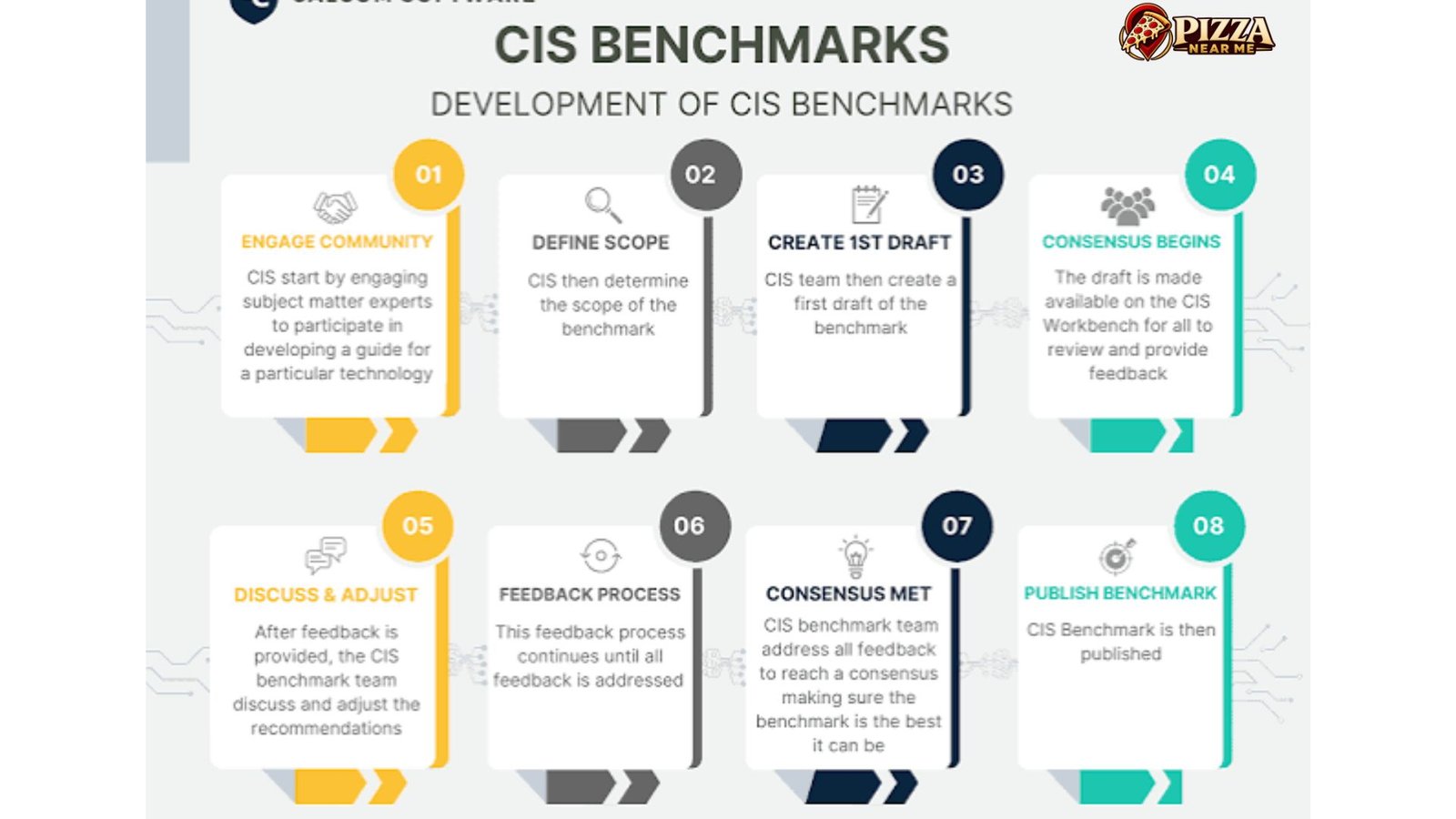
CIS Benchmarks are secure configuration recommendations developed by the Center for Internet Security to help organizations harden operating systems, cloud platforms, applications, databases, network devices, and other technologies. They provide specific guidance for reducing unnecessary exposure and establishing more consistent security configurations.
For security teams, system administrators, cloud engineers, and compliance professionals, the value is practical: instead of deciding every security setting from scratch, teams can work from an established configuration baseline created through a consensus-driven process involving cybersecurity professionals and technology experts.
What Are CIS Benchmarks?
CIS Benchmarks are prescriptive recommendations for securely configuring particular technologies. They are not a general cybersecurity framework or a list of vulnerabilities. Instead, they focus on how a specific system or product should be configured to improve its security posture.
The guidance covers more than 25 vendor product families and more than 100 benchmarks, spanning areas such as operating systems, cloud providers, server software, network devices, databases, desktop applications, containers, and mobile platforms.
A benchmark normally contains individual recommendations that can be assessed against a system. Depending on the technology, these may address authentication, permissions, logging, encryption, network services, account policies, or other configuration settings.
This specificity distinguishes a benchmark from broader security frameworks. NIST describes security configuration checklists and benchmarks as guidance that specifies secure settings for particular IT platforms or products.
How CIS Benchmarks Work
The basic process is straightforward:
- Identify the technology. Select the operating system, cloud service, database, application, or device that needs hardening.
- Choose the appropriate benchmark. Different products and versions can have different recommendations.
- Review the recommendations. Understand what each setting changes and whether it fits the organization’s environment.
- Implement approved settings. Apply the configuration manually or through suitable automation.
- Assess compliance. Check systems against the selected baseline and investigate deviations.
- Maintain the configuration. Reassess after operating-system updates, application changes, architecture changes, or new benchmark releases.
The Center for Internet Security provides current benchmark listings and also maintains older versions through CIS WorkBench. Free benchmark PDFs are available for non-commercial use, subject to CIS access requirements.
Level 1 and Level 2 Guidance
Many benchmarks distinguish between Level 1 and Level 2 recommendations. Level 1 generally provides practical hardening that can be applied without causing significant operational impact, while Level 2 represents more stringent security configurations that may require greater planning and testing.
The appropriate level depends on the organization’s risk tolerance, operational requirements, and technology environment. A highly restrictive setting is not automatically the best setting if it breaks a business-critical service.
| Area | What to consider | Practical objective |
|---|---|---|
| Operating systems | Windows, Linux, macOS and supported versions | Reduce unnecessary system exposure |
| Cloud platforms | Identity, storage, logging and service configuration | Strengthen cloud security posture |
| Applications | Authentication, permissions and security settings | Reduce application-level weaknesses |
| Network devices | Management access, services and protocols | Limit attack surface |
| Databases | Access control, auditing and configuration | Protect sensitive data |
| Assessment | Automated or manual verification | Identify configuration drift |
💡 Pro Tip: Do not apply a benchmark blindly to production. Test recommendations in a representative environment first, document exceptions, and identify settings that could affect applications, integrations, performance, or administrative workflows.
CIS Benchmarks vs. CIS Controls
The names are similar, but the two resources serve different purposes.
CIS Controls are a prioritized set of cybersecurity safeguards intended to help organizations address common attack risks. CIS Benchmarks, by contrast, provide technology-specific configuration recommendations.
The relationship is useful. CIS states that many benchmark recommendations map to the CIS Controls, creating a practical path from broader security objectives to specific technical configurations.
For example, an organization may use CIS Controls to decide that secure configuration management is an important security objective, then use a relevant benchmark to determine which settings should be reviewed on a particular platform.
This distinction also helps prevent a common mistake: treating a benchmark as a complete cybersecurity program. Secure configuration is important, but it does not replace identity management, vulnerability management, monitoring, incident response, data protection, or other security practices.
Why Organizations Use CIS Benchmarks
The main advantage is consistency. Without a defined baseline, similar servers or cloud accounts can gradually acquire different configurations. That creates uncertainty and makes security reviews harder.
A documented benchmark also gives technical teams a common reference point. Security engineers can assess deviations, administrators can understand expected configurations, and compliance teams can use documented evidence when applicable.
CIS Benchmarks can also support broader compliance efforts. CIS explains that its benchmark recommendations can help organizations establish an on-ramp toward security and compliance requirements, although using a benchmark does not automatically mean an organization satisfies a particular regulation or framework.
Another benefit is repeatability. Once an organization defines an approved baseline, configuration management and assessment tools can help detect changes over time. This is especially valuable in large environments where manual review of every system is impractical.
Common Mistakes to Avoid
One mistake is selecting the wrong benchmark version. Technology changes quickly, and organizations should confirm that the benchmark matches the relevant product and version.
Another is treating every recommendation as universally applicable. Business applications sometimes require configurations that differ from a strict baseline. Exceptions should be documented, reviewed, and protected with compensating controls where appropriate.
A third mistake is focusing only on initial deployment. Secure configuration is not a one-time project. Updates, new services, administrative changes, and infrastructure migration can introduce configuration drift.
Finally, avoid confusing compliance with security. A system can meet a particular configuration baseline while still having vulnerabilities, weak identity controls, exposed services, or other security problems.
📌 Key Takeaway: CIS Benchmarks provide technology-specific secure configuration guidance, making them useful for establishing measurable and repeatable security baselines. Their greatest value comes from combining careful implementation, testing, continuous assessment, and documented exceptions rather than treating them as a checklist to apply without context.
Frequently Asked Questions
Are CIS Benchmarks free?
CIS provides benchmark PDFs free for non-commercial use, although users need a CIS account to access the downloads. Organizations should check the current CIS terms and available licensing options before using benchmark materials commercially.
Are CIS Benchmarks mandatory?
No. They are security configuration recommendations rather than a universal legal requirement. An organization may adopt them voluntarily or use them to support requirements from a particular security, regulatory, contractual, or internal policy framework.
What is the difference between CIS Benchmarks and NIST?
NIST publishes security guidance, standards, and resources, while CIS publishes its own consensus-based configuration benchmarks. NIST also recognizes benchmarks and configuration checklists as mechanisms for defining secure settings for specific technology platforms.
How often should a CIS Benchmark be reviewed?
Review frequency should reflect technology changes and the release of new benchmark versions. Teams should reassess baselines when operating systems, applications, cloud services, architectures, or security requirements change rather than relying indefinitely on an unchanged configuration.
Can CIS Benchmarks be automated?
Yes. Organizations can use configuration-management, assessment, and security tools to help implement or evaluate benchmark recommendations. CIS also provides resources such as CIS-CAT Pro and Build Kits for supported benchmarks and environments.
Conclusion
CIS Benchmarks turn broad secure-configuration goals into concrete recommendations for specific technologies. They can help organizations establish consistent baselines, identify configuration drift, and strengthen technical security practices.
The strongest approach is not simply to maximize the number of recommendations implemented. It is to select the correct benchmark, understand the operational impact, test changes, document justified exceptions, and continuously assess the environment. Used that way, CIS Benchmarks become a practical part of a broader cybersecurity program rather than a standalone compliance checklist.
