

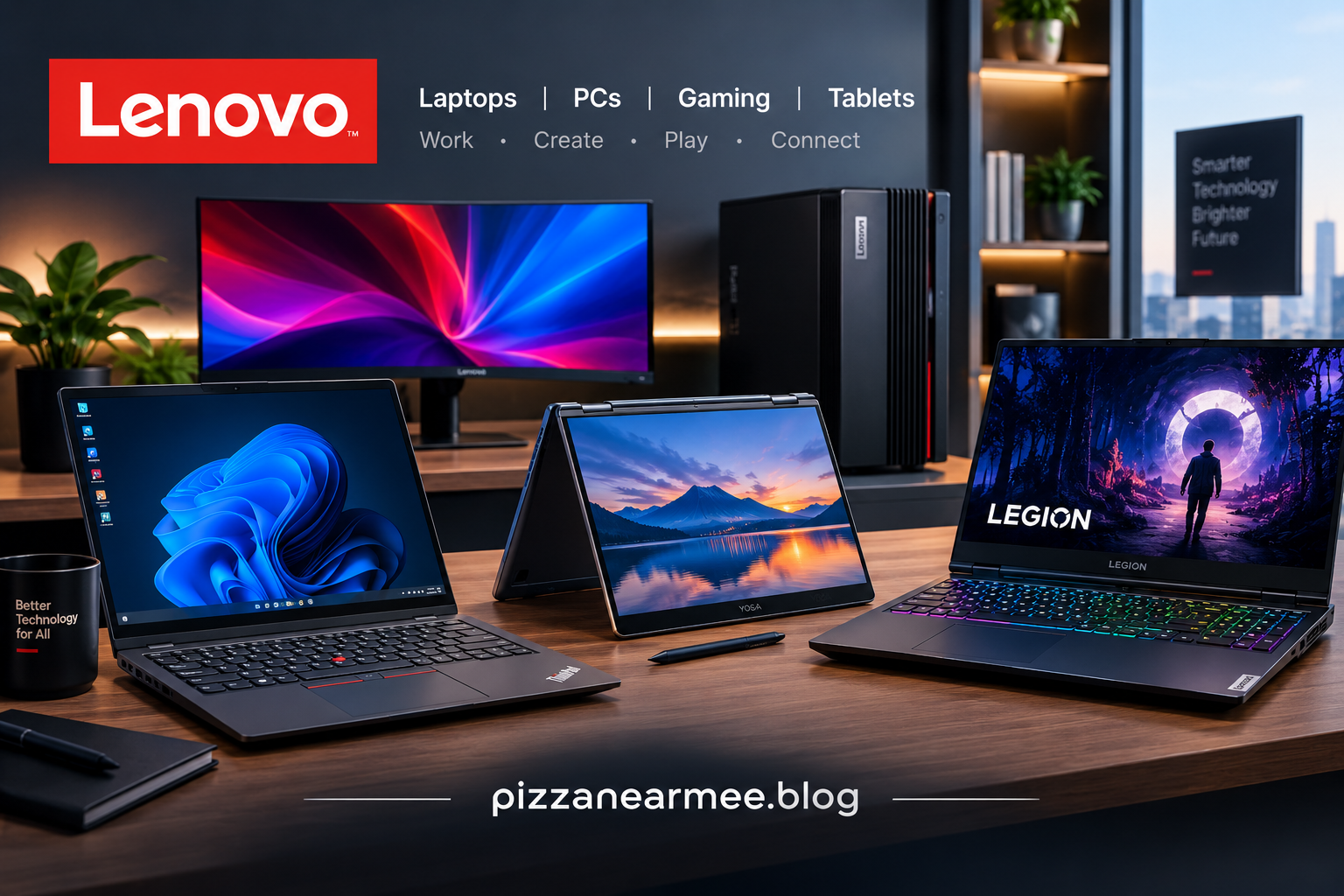
Lenovo is one of the major names in personal computing, with a product range covering laptops, desktops, tablets, monitors, gaming hardware, workstations, accessories, and business technology. The company serves different audiences through families such as ThinkPad, Yoga, IdeaPad, Legion, LOQ, and ThinkBook rather than relying on one type of computer.
For someone researching the brand before buying a new device, the key is understanding what each family is designed to do. A business laptop, a thin 2-in-1, and a gaming machine can carry the same brand name while being built for very different priorities.
What Is the Brand Known For?
The company has a long history in the PC market and now operates across consumer and commercial technology. Its product portfolio includes PCs, smartphones, tablets, software, accessories, and other connected products.
The brand is particularly recognizable for ThinkPad business laptops, Yoga convertible devices, IdeaPad consumer laptops, and Legion gaming systems. It also sells desktops and workstations.
That broad portfolio creates plenty of choice, but it also means the model name matters. Looking only at the company name is not enough to determine whether a particular machine is suitable for you.
Lenovo Laptop Families Explained
ThinkPad
ThinkPad is the business-focused family. These machines are built around productivity, portability, security, and features intended for professional users. The range includes mainstream business notebooks as well as premium systems such as the ThinkPad X1 line.
Yoga
Yoga is aimed at users who want flexible designs and premium consumer features. Many Yoga systems use 2-in-1 designs that allow the display to fold into different positions. The family also includes thin laptops designed for creative work, productivity, and everyday use.
IdeaPad
IdeaPad covers a broad section of the consumer laptop market. It includes machines for everyday tasks such as web browsing, schoolwork, office applications, media consumption, and general productivity. Specifications vary substantially between models, so the exact processor, memory, display, and storage configuration should be checked before purchase.
Legion and LOQ
Legion is the company’s gaming-focused family, while LOQ provides another route into gaming PCs and laptops. Legion systems generally target demanding gaming and performance workloads, with dedicated graphics and higher-performance components on appropriate models.
| Family | Main audience | Typical priority |
|---|---|---|
| ThinkPad | Professionals and businesses | Productivity, durability, security |
| Yoga | Creators and everyday users | Flexible design and premium features |
| IdeaPad | Students and general users | Everyday computing and value |
| Legion | Gamers and power users | Gaming performance and graphics |
| LOQ | Gaming-focused buyers | Performance across different configurations |
What Makes the Brand Different?
One of the company’s biggest strengths is the breadth of its hardware lineup. A buyer can move from a compact everyday notebook to a workstation or gaming desktop without leaving the same overall ecosystem.
Lenovo is also investing heavily in AI-enabled personal computing. Newer PCs increasingly include dedicated hardware designed to accelerate AI workloads, while some product families emphasize local AI features for productivity and creative applications.
The company’s recent product direction also shows an interest in flexible hardware, AI-assisted computing, gaming, and new form factors. That makes the brand relevant to buyers who want more than a conventional laptop design.
💡 Pro Tip: Do not buy a laptop because the processor name or brand sounds impressive. Compare the complete configuration: CPU, GPU, RAM, SSD capacity, display resolution and refresh rate, battery size, weight, ports, and warranty. Two laptops with similar names can provide very different experiences.
Choosing the Right Device
The best starting point is the task, not the model number.
For office work, university assignments, browsing, and video calls, a lightweight machine with a good keyboard, enough memory, and a quality display may matter more than maximum processing power. Business buyers may place additional importance on security, manageability, connectivity, and durability.
For creative work, look at the display as carefully as the processor. Photo and video editors may need a higher-quality panel, stronger graphics, more memory, and faster storage.
Gaming changes the priorities again. A dedicated GPU, effective cooling, high-refresh-rate display, fast storage, and sufficient memory can have a greater impact on the experience than simply choosing the newest CPU.
Tablets can make sense for people who prioritize portability, reading, entertainment, note-taking, or a secondary screen. Lenovo’s current portfolio includes Android tablets alongside its Windows PC products.
Are These Computers Good for Students and Professionals?
They can be, but the answer depends on the model and workload. The product range is broad enough to cover basic student tasks, professional office work, software development, creative applications, and gaming.
Students should pay attention to weight, battery life, keyboard comfort, webcam quality, and price. Someone carrying a laptop between classes every day may benefit more from a lightweight design than from a large high-performance machine.
Professionals should consider connectivity, security features, repair and support options, display quality, and the software they actually use. ThinkPad systems are positioned specifically toward business and professional computing.
What About Lenovo Gaming PCs?
Gaming is an important part of the company’s current lineup. Legion systems target high-performance gaming, while LOQ provides additional gaming configurations.
A gaming buyer should look beyond the graphics card. Cooling design, screen response, memory, storage, power delivery, and the ability to upgrade or expand the system can all affect long-term value.
For competitive gaming, a high-refresh display can be particularly useful. For demanding single-player games, GPU performance and display resolution may deserve more attention.
📌 Key Takeaway: Lenovo offers a wide range of computers rather than one universal type of device. ThinkPad is centered on business computing, Yoga emphasizes flexible and premium designs, IdeaPad covers everyday consumer needs, and Legion and LOQ focus on gaming. The right choice depends on workload, portability, display requirements, performance, and budget.
Frequently Asked Questions
What is Lenovo best known for?
The brand is widely known for its ThinkPad business laptops, but its portfolio also includes Yoga, IdeaPad, Legion, LOQ, desktops, tablets, monitors, workstations, and other technology products.
Is Lenovo a good brand for laptops?
Its laptops span multiple price and performance levels. Instead of judging the entire brand from one model, compare the specifications, build, display, battery, warranty, and intended use of the particular device.
Which series is best for business?
ThinkPad is the company’s main business-oriented laptop family. Different ThinkPad models target different levels of portability, performance, and professional requirements.
Which series is for gaming?
Legion is the primary gaming family, while LOQ offers additional gaming-focused laptops and PCs. Exact performance depends on the configuration.
Does Lenovo make AI PCs?
Yes. The brand’s current portfolio includes AI-focused PCs across families such as Yoga, ThinkPad, IdeaPad, and Legion, with newer systems using processors designed to accelerate AI workloads.
Final Thoughts
The company’s range is large enough to cover very different computing needs, from a lightweight student notebook to a business workstation or high-performance gaming machine. That variety is the main reason buyers should research the specific series and configuration rather than choosing by brand alone.
Whether the priority is portability, productivity, creative work, gaming, or AI features, the company provides several routes to a suitable device. The most useful comparison starts with your workload and then works backward to the hardware that supports it. Lenovo remains a broad choice for different kinds of users.

1 Comment
Pingback: Programming: A Practical Guide to Coding Basics